



LASIK Technology

LASIK Technology
Our Cutting-Edge Technology
At Lexington Eye Associates, we use the most modern vision-correction technology, and Dr. Kieval has undergone specialized training to be certified to operate this cutting-edge laser vision-correction equipment. From testing and diagnostic equipment to the blade-free IntraLase® laser and our VISX STAR S4™ excimer laser, you can be confident that Lexington Eye Associates invests in the best equipment to give you the best visual outcome.
IntraLase® Blade-Free LASIK
The Past = Blades
Until recently, LASIK could only be performed by creating an incision in the cornea with a hand-held blade called a microkeratome. These microkeratomes have been used for decades and are still in use by many surgeons today.
Although they provide satisfactory results in most patients, the incisions are unpredictable in depth and architecture and have a much higher rate of complications both during and after surgery.
The Present = Bladeless
The latest technology available for LASIK involves the use of a femtosecond laser. A femtosecond laser uses tiny pulses of laser light to perform the first step of LASIK: creating a corneal flap.
IntraLase® is the most trusted and time-tested brand of femtosecond laser technology that is commercially available. A sophisticated computer guides the laser with precision accuracy far superior to that of a microkeratome. It can create an incision of the exact depth, diameter, location, and architecture desired. IntraLase® technology has led to better visual outcomes with higher percentages of patients achieving perfect vision. More importantly, IntraLase® has greatly reduced and nearly eliminated complications during the procedure.
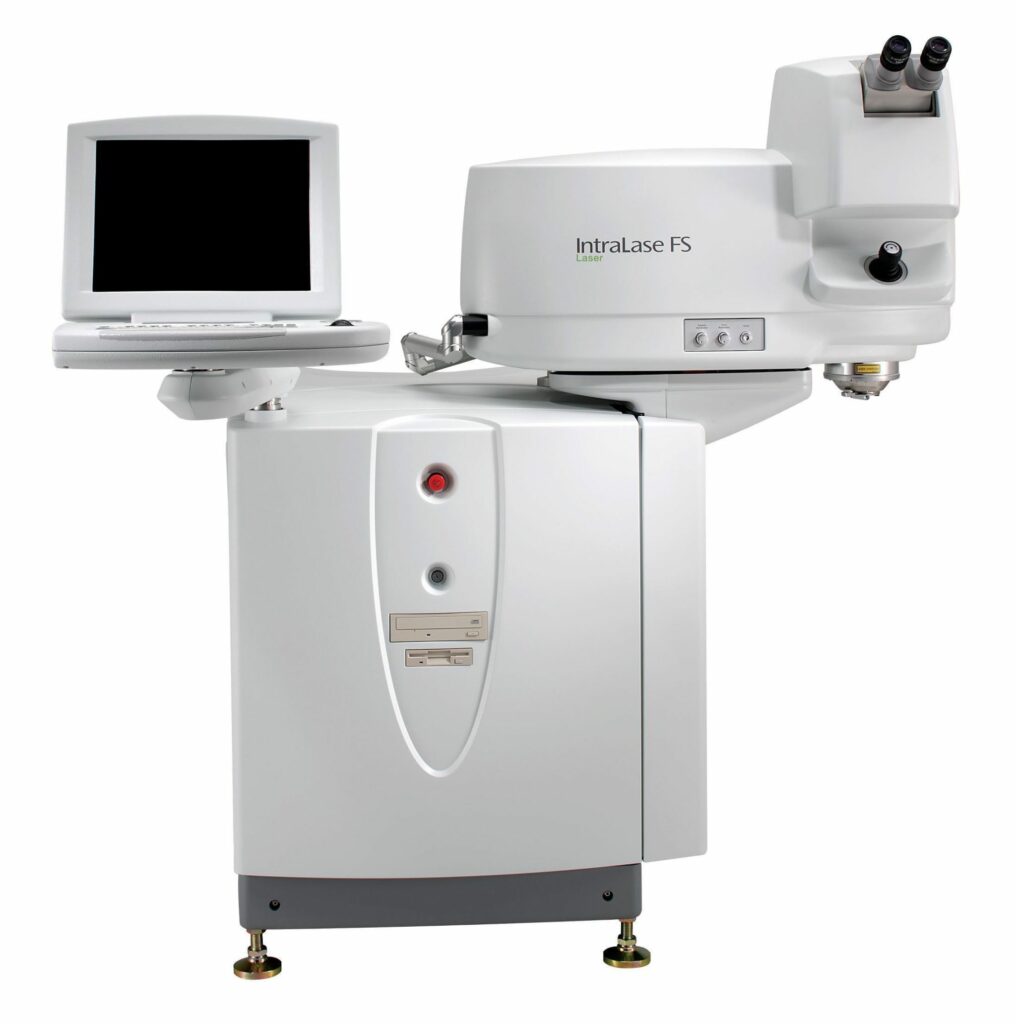
Dr. Kieval uses IntraLase® technology exclusively to guarantee safety and ensure the utmost accuracy throughout your LASIK procedure.
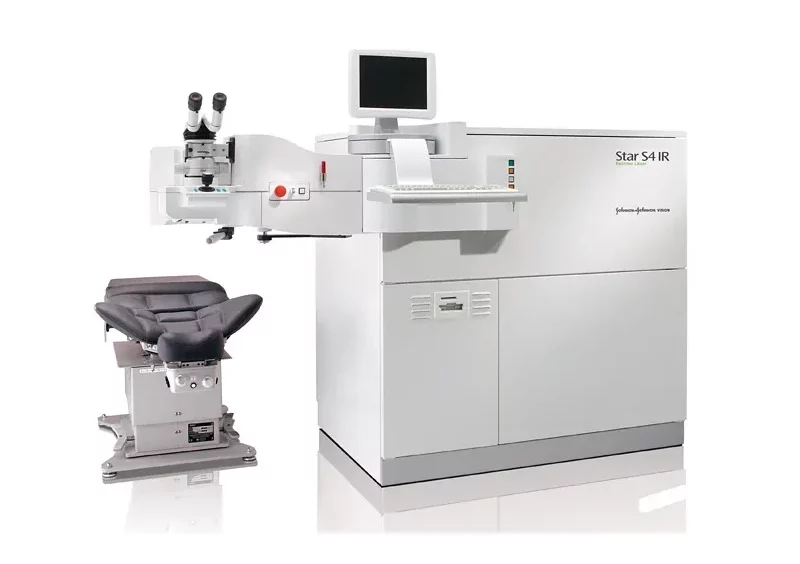
VISX STAR S4™ Excimer Laser
The Past = Non-Dimensional
LASIK and PRK provide perfect vision as a result of excimer laser technology. Excimer lasers use energy that reshapes the cornea by removing ultra-fine layers of cells without any heat or collateral injury to the remaining tissue.
Earlier designs of excimer lasers did not take into account three-dimensional rotations and movements of the eye. This resulted in treatments that were imprecise and often led to visual aberrations that could degrade vision.
The Present = Three-Dimensional
One of the latest designs in excimer laser technology is the VISX STAR S4™, with ActiveTrak™ and Variable Spot Scanning (VSS™). ActiveTrak™ was the first FDA-approved tracker to track eye movements in 3-D along the X, Y, and Z axes. In doing so, it detects and compensates for a person’s tiny eye movements by guiding the laser beam to keep the treatment centered at all times. The tracker provides pinpoint accuracy in patients’ procedures and does so with maximum efficiency that decreases the amount of time needed for the treatment. Over two million people have benefited from laser vision correction with the VISX® laser.
Dr. Kieval uses the VISX STAR S4™ with ActiveTrak™ exclusively for all LASIK and PRK procedures.
CustomVue™
The Past = Conventional
When light isn’t focused through the eye correctly, we need glasses. The prescriptions are based on determining the deviations of light called “lower-order aberrations.” These lower-order aberrations can be directly measured in the office using simple pieces of equipment. With “conventional” LASIK and PRK, one’s prescription is measured with this equipment and manually entered into the excimer laser. This information is then used to guide the laser treatment. For years, this method of vision correction provided satisfactory results. However, despite good outcomes, some patients had side effects such as glare, halos, or poor night vision.
The Present = Custom
We know that there is more to unfocused vision than just lower-order aberrations. Just like a fingerprint, each person’s visual aberrations are 100 percent unique to their eyes. This is the result of “higher-order aberrations” that cannot be measured with simple instruments, as they require complex and sophisticated systems for analysis. WaveScan™ technology is one such system that measures higher-order aberrations and was initially developed to reduce distortions when viewing objects in space through high-powered telescopes. It can measure and identify imperfections in a patient’s eye 25 times more accurately than standard methods.
The CustomVue™ procedure is the most advanced method of laser vision correction available. During the CustomVue™ procedure, aberrations measured by the WaveScan™ transfer to the VISX S4™ excimer laser. The laser will use this data to correct every imperfection specific to your eye, providing a level of precision and accuracy never before possible. With the advent of CustomVue™ and WaveScan™ technology, unparalleled results have been possible, with many patients seeing better than they did with glasses or contact lenses. Moreover, the incidence of unwanted side effects, such as glare, halos, and decreased night vision, have been greatly reduced.
Pentacam
The Past = Topography
A prerequisite to performing safe and precise laser refractive surgery is the ability to accurately measure the shape, thickness, and contour of the cornea before surgery. Previously, doctors only had scans such as corneal topography as a method of measuring these data points. Topography scans are capable of showing possible problem areas, but are limited to a view of the front surface of the cornea only. Subtle abnormalities of the back, or posterior, surface of the cornea are impossible to measure with conventional instruments. These subtle abnormalities of the back surface of the cornea are often responsible for unpredictable and sometimes devastating visual outcomes after laser vision correction.
The Present = Tomography
The Oculus Pentacam is the most advanced technology in the art and medicine of corneal imaging. It utilizes an illumination system and rotating camera to capture up to 25,000 measured data points in a scan time of two seconds per eye. Like a topographical map, each cornea is measured for elevation. However, the Oculus Pentacam produces additional imaging and calculation for the curvature, contour, and tissue density at all surfaces of the cornea.
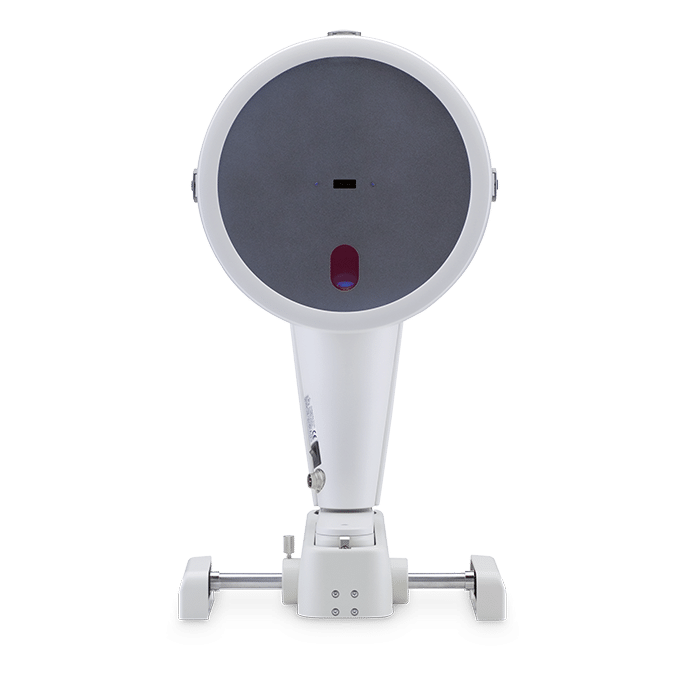
The Oculus Pentacam provides corneal mapping and tissue diagnostics with an accuracy that was previously not available. This technology allows us to more accurately identify laser eye surgery candidates and in turn improve patient safety and outcomes.
Put simply, Dr. Kieval uses the Pentacam imaging system on every patient who is contemplating laser eye surgery. In our opinion, no instrument is more detailed, accurate, and helpful as a diagnostic tool to determine a patient’s candidacy for laser vision correction.
To learn more about this cutting-edge technology, visit www.pentacam.com.