



Diabetic Retinopathy

Diabetic Retinopathy
People with diabetes are 25 times more likely to lose their vision than those without. If you have been diagnosed with diabetes, it is important to have a comprehensive eye exam at least once a year. At Lexington Eye Associates, we perform a thorough retinal exam through dilated pupils to check for any diabetic complications, including diabetic retinopathy.
Everyone who has diabetes is at risk for developing diabetic retinopathy, but not all diabetics ultimately develop it. In the early stages, you may not notice any change in your vision. This is why annual exams are recommended even if you have no symptoms.
Changes in glucose levels increase your risk of diabetic retinopathy, as does long-term diabetes. Diabetes can damage the blood vessels in your eyes causing them to leak which can cause vision loss.
According to the American Academy of Ophthalmology, 95 percent of those with significant diabetic retinopathy can avoid substantial vision loss if they are treated in time.
Stages of Diabetic Retinopathy
The stages of diabetic retinopathy are divided into two categories: non-proliferative and proliferative retinopathy.
Non-Proliferative Retinopathy
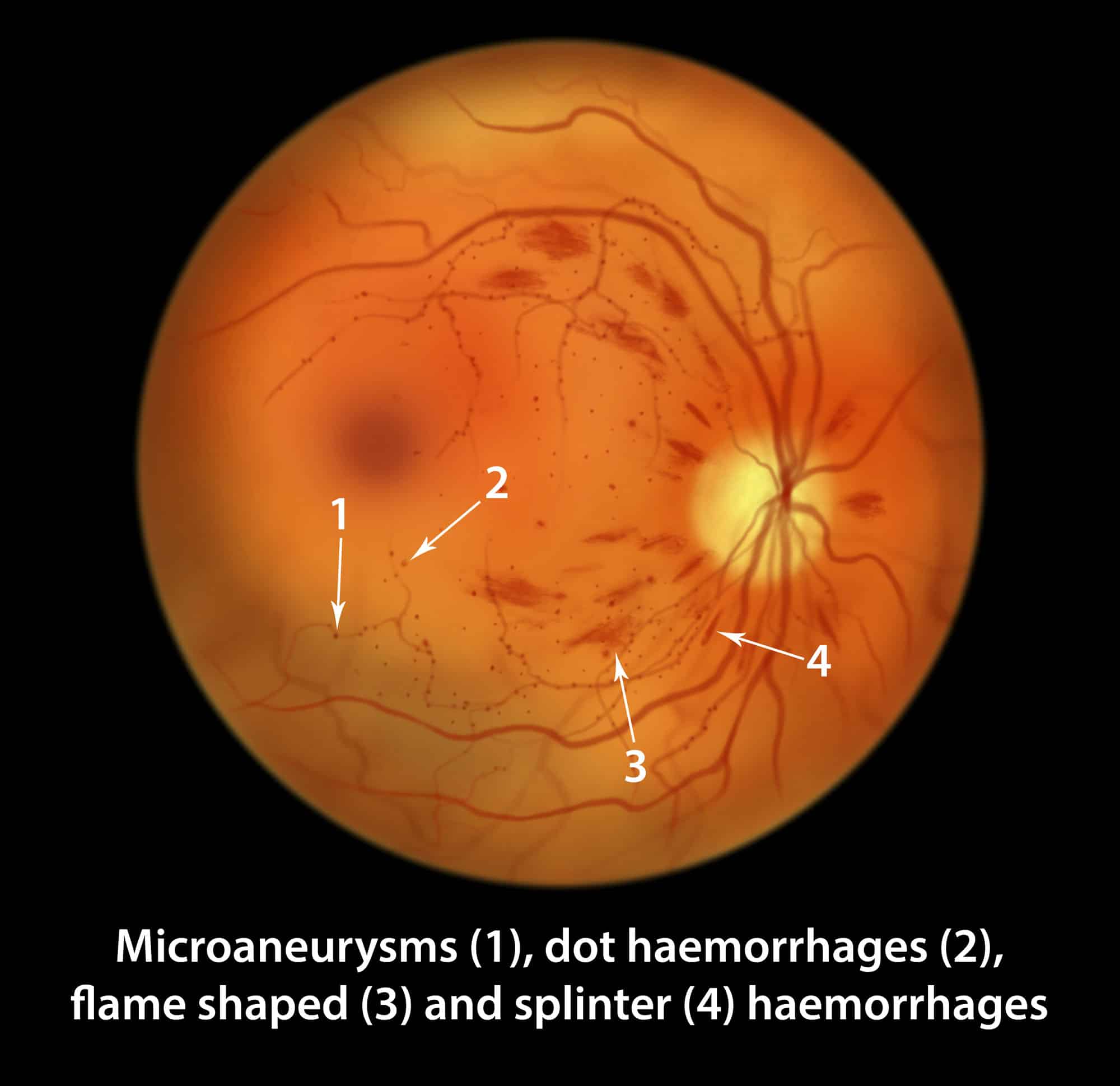
This is the first and earliest stage of diabetic retinopathy. NPDR occurs when the small blood vessels of the retina start to leak fluid or bleed. This activity will lead to the formation of deposits called exudates. Once these blood vessels start to leak swelling within the central part of the retina occurs. When the leakage of these blood vessels causes swelling, macular edema sets in and the blood vessels can become blocked. This stage of diabetic retinopathy is common when a person develops diabetes. Most diabetics have some grade of NPDR.
Proliferative Retinopathy
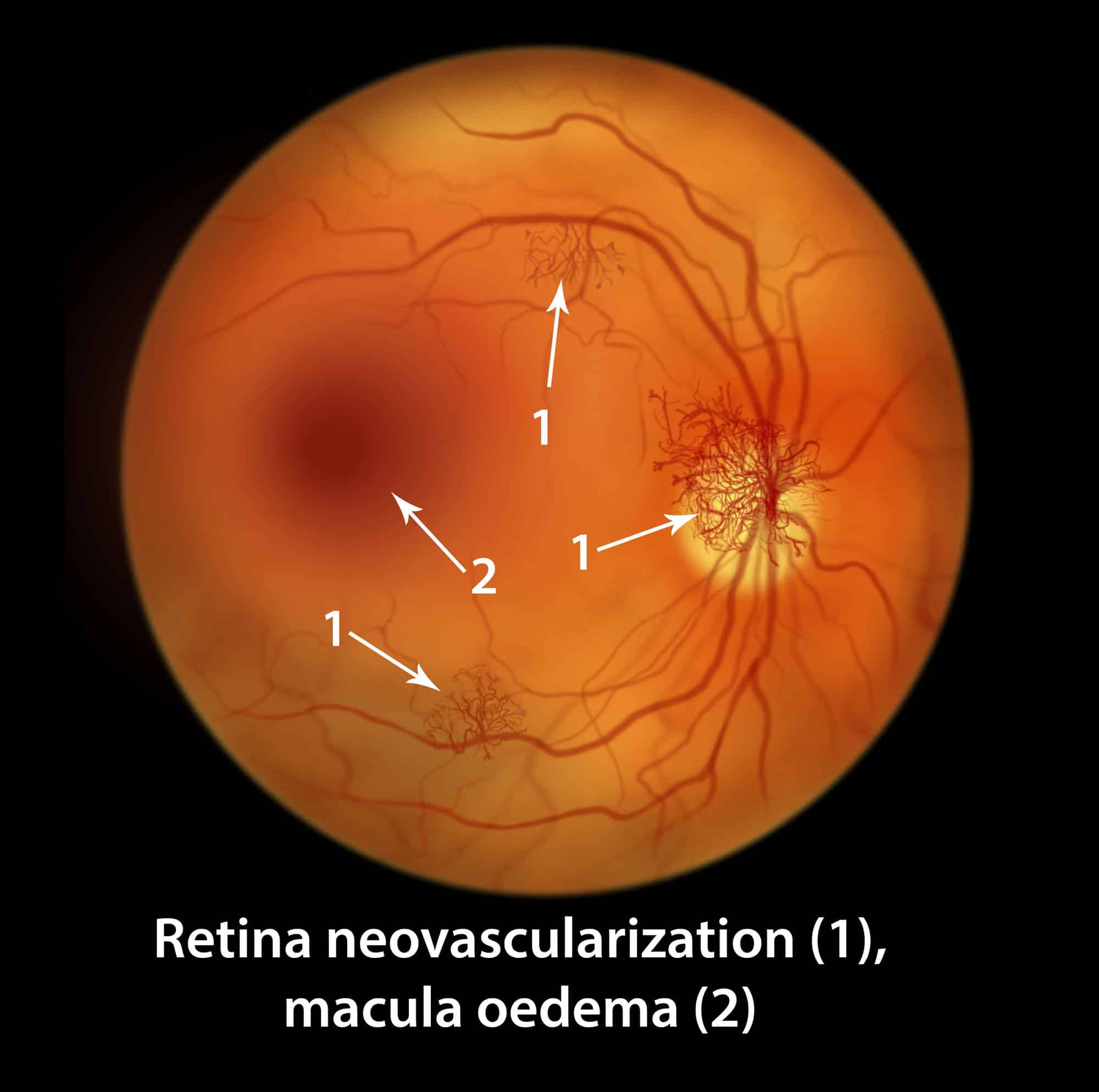
When new vessels start to grow as a result of the existing vessels becoming blocked, this marks the beginning of the next stage of diabetic retinopathy: proliferative diabetic retinopathy. This level of diabetic retinopathy is the most severe and dangerous form for the diabetic patient. These new abnormal blood vessels can grow on the retina, optic nerve, iris, or into the vitreous gel inside the eye, and tend to grow poorly and are very fragile. The damage that these blood vessels bring to retina can be catastrophic and include hemorrhages on the retina, scar tissue buildup, and possible retinal detachment.
Diabetic Retinopathy Symptoms
If you are diabetic, it is suggested that you have regular eye exams to look for symptoms. Diabetic retinopathy does not really have any initial warning signs.
*If proliferative diabetic retinopathy is left untreated, blindness can occur. The best alternative to fighting PDR is early detection so that you and your eye doctor can begin to control this development.
Detecting Diabetic Retinopathy
The doctors at Lexington Eye Associates will detect diabetic retinopathy through regular comprehensive eye exams with their diabetic patients. In the earliest stages of diabetes, eye exams once or twice a year may be acceptable. Your doctor will be specifically looking for the leaking blood vessels that can lead to more advanced levels of this eye disease. A dilated eye exam will be performed by your eye doctor and retinal photographic equipment will be used.